
















Answer Engine Optimization: How Service Businesses Get Cited by AI
More customers read an AI answer before they ever click a link. Here is how answer engines pick their sources, and how to become one.
Get Your Free Growth Plan
A homeowner used to search “best roofer near me” and click through a few results. Now Google often answers first with an AI Overview, and plenty of people ask ChatGPT or another assistant before they search at all. Those answers name a few sources. Answer engine optimization, or AEO, is the work of becoming one of them.
This guide covers how answer engines choose sources and what a service business can do about it.
What answer engines are
An answer engine responds to a question with an answer instead of a list of links. Google AI Overviews, ChatGPT search, Perplexity, Gemini and Microsoft Copilot all work this way. Most of them show the sources they drew from, and those citations are the new top spots.
How they choose sources
No tool publishes its exact method, but the pattern is consistent:
- They draw on pages that already rank well. Google’s AI Overviews pull heavily from pages in its regular results, so weak SEO usually means weak AI visibility.
- They prefer clear, direct answers. A page that answers the question in its first lines, in plain language, is easier to quote than one that buries it under an introduction.
- They check facts against other sources. When your business details, services and credentials match across your site, your Google Business Profile, directories and reviews, the tools can describe you with confidence.
- They read structure. Headings that match questions, short paragraphs, lists, tables and schema markup make a page easier for a machine to parse.
- They favor sources that show experience. Real names, credentials, project details and first-hand numbers give a page something generic content cannot copy.
What a service business should do
1. List the questions your customers ask
Start with the questions that come right before a hiring decision: what does it cost, how long does it take, how do I choose a company, what should I ask, is this covered by insurance. Add the ones your crew hears on every job.
2. Answer each one directly
Give the answer in the first sentence or two, then the details. Use the customer’s words in the heading. One question per section, or one page for a big question.
3. Show who is answering
Put a real author on your content, with a short bio, and include the details only you have: the jobs you have done, the towns you serve, the numbers from your own work.
4. Get your facts consistent everywhere
Same business name, address, phone, services and hours on your site, your Google Business Profile and the directories in your industry. Inconsistent facts make a tool less likely to cite you.
5. Add schema markup
Mark up your business (LocalBusiness or a more specific type), your services, your FAQs and your articles, so machines know exactly what each page is.
6. Keep doing the SEO
Rankings, reviews and links still decide which pages the tools see first. AEO sits on top of that work, not in place of it.
7. Measure it
Run your question list in Google and a couple of AI assistants every month and record where you are cited. It is the only reliable way to see the trend.
An example: Semper Secure
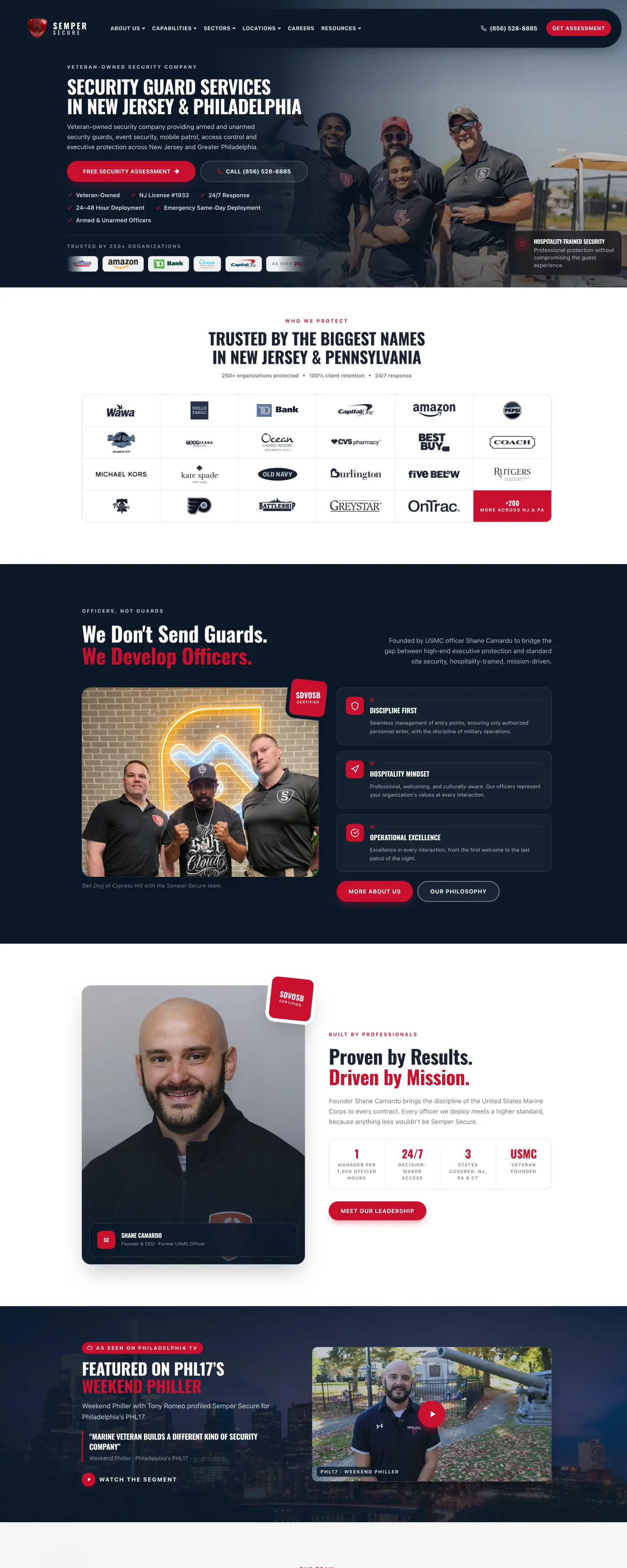
Semper Secure, a security company in Cherry Hill, New Jersey, structured its pages around the searches that turn into contracts, like event security and executive protection, and wrote them to be quotable. When we tested 20 high-intent Google AI Overviews, Semper was cited as a source in 8 of them, 40%. The same pages helped it take 335 calls in one month. The details are in the Semper Secure case study.
Where to start
If you want this done for you, see our AI SEO service. If you want to start yourself, build the question list this week and fix the answers on your most important service pages first. The free growth plan includes a check of whether AI answers mention your business today.